Kovex Labs: Predict audience brain response.
The moments that work.
And the ones that lose people.
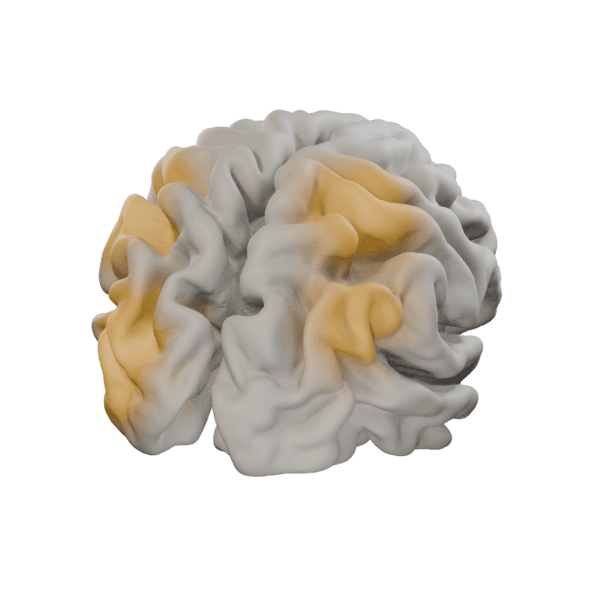
Kovex is a human brain foundation model trained on human EEG and gaze recordings to predict population-level brain activity and visual attention in response to multimedia—moment by moment, across the full experience.
Attention
Where viewers are likely to stay engaged—and where the cut may start losing them.
Arousal
How activating or intense each moment is predicted to feel.
Memory
Moments with stronger predicted encoding potential, including the peaks around key messages and brand cues.
Visual focus
A live population gaze map showing which part of the frame is most likely to attract attention.
What people say.
What their brain actually does.
Most audience-testing tools are sentiment models: trained to predict the words a person reaches for when you ask how a video made them feel. That's a report, shaped by memory, mood, and a willingness to answer well — not a measurement of what happened while they were actually watching.
Sentiment models
A person, asked after the fact
The words someone chooses to describe a feeling
Memory, mood, vocabulary, and pressure to answer well
One self-reported score for the whole video
Human brain foundation model
The video or image itself
Predicted population EEG and eye movement
Nothing but the content — no self-report involved
A moment-by-moment, objective response curve
Self-report tells you what someone was willing to say afterward. Kovex tells you what happened while it mattered.
Two cuts.
One clearer decision.
Compare two adidas campaign films on the same 88-second timeline. Kovex turns a creative preference into a moment-by-moment response profile—then checks whether the stronger public outcome is also the stronger match to the intended campaign shape.
More public views at capture. The result is directional evidence, not a controlled A/B lift.
The view count tells us which film won distribution in public. The three response curves show where that win may have been earned. Kovex is useful because it makes the creative difference inspectable—down to the exact moments where the audience response diverges.
Creative instinct,
backed by audience intelligence.
Bring predicted population response into the review. Compare cuts, find the moments that weaken the experience, and focus creative judgment where it matters.
Find the stronger cut before media spend.
Review alternate edits in the same report format. Check whether the opening earns attention, whether the middle loses energy, and whether the product or brand moment is visually clear.
Know what lands before launch.
Tell us what your team wants to test. An invitation helps, but it is never required to request access.
Start your request About two minutes · No long brief required